

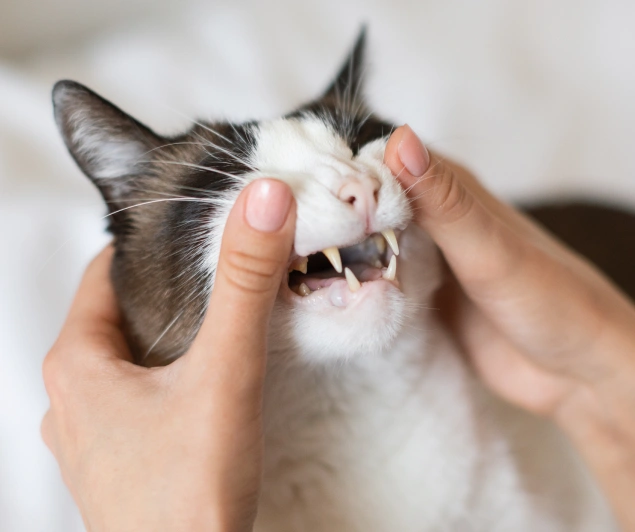

Keep Your Cat’s Teeth Healthy and Pain-Free
Your cat's mouth says a lot more than meow, and most of the time, it's asking for help. Dental problems in cats are among the most overlooked health issues, yet they affect many adult cats across the country. Left untreated, poor oral health can lead to pain, tooth loss, and even damage to internal organs. At Park Grove Pet Hospital, we take cat dental care in Cottage Grove seriously, because a healthy mouth is the foundation of a healthy life for your feline companion.
Why Your Cat's Oral Health Deserves Closer Attention
Since cats hide their pain extremely well, you might not notice anything wrong until your cat stops eating, starts drooling, or suddenly becomes irritable. Dental disease in cats often builds quietly over months and years, beginning with a thin layer of plaque and gradually turning into painful gum disease, tooth infections, or worse. By the time visible signs appear, the damage may already be significant.
The good news? Routine dental care makes a real difference. When you catch problems early and keep up with regular cleanings, your cat gets to live pain-free, and that changes everything about their quality of life.
Signs Your Cat May Have Dental Problems
Cats rarely show pain the way humans or dogs do. However, some signs often signal something is going on inside their mouth:
- Bad breath: More than just "cat breath," a foul odor from your cat's mouth can indicate bacterial buildup or infection in the gums or teeth.
- Pawing at the mouth: When a cat repeatedly paws at their face or mouth area, it usually means they're feeling discomfort or irritation.
- Dropping food or chewing on one side: This often means eating has become painful, and your cat is trying to avoid using a sore spot.
- Drooling more than usual: Excessive drooling, especially if it's thick or slightly bloody, is a warning sign that something in the mouth needs attention.
- Yellow or brown buildup on teeth: Visible tartar is a clear signal that a dental cleaning is long overdue.
- Swollen or red gums: Inflamed gums are one of the earliest and most common signs of gum disease in cats.
If you've noticed one or more of these signs, it's time to schedule a dental exam. Waiting only gives the problem more time to worsen.
What We Do During a Cat Dental Appointment
Dental care for cats is more involved than brushing their teeth at home. A thorough veterinary dental visit includes multiple steps that each play a role in protecting your cat's oral health. Here's what a complete dental procedure at our clinic looks like.
Pre-Anesthetic Exam and Bloodwork
Before any dental procedure, we conduct a full physical exam and run bloodwork for your cat's safety. The bloodwork helps us assess organ function, especially the liver and kidneys, to ensure your cat can safely undergo anesthesia, is non-negotiable for us because it allows the vet to tailor the anesthetic plan specifically to your cat's health status and age.
Full Anesthetic Monitoring
All dental procedures for cats require general anesthesia. We know this can feel scary, but it's the only way to do a thorough, pain-free exam and cleaning. Cats can't hold still for dental X-rays or deep scaling while awake, and doing so without anesthesia would be stressful and incomplete.
Throughout the procedure, our team provides full anesthetic monitoring, tracking heart rate, oxygen levels, blood pressure, and body temperature in real time. A dedicated team member watches your cat the entire time, from when they go under to when they fully wake up.
Digital Dental X-Rays
One of the most important tools we use is digital dental X-rays. Up to 60% of a tooth's structure lies below the gumline, completely hidden from the naked eye. Digital X-rays let our veterinarian see the full picture: tooth roots, bone density, hidden fractures, and infections that would otherwise go undetected.
Without X-rays, even trained veterinarians can miss serious problems. We take dental radiographs on every patient during their dental procedure, so nothing gets overlooked.
Ultrasonic Scaling
Once we have a full picture of what's going on in your cat's mouth, we use ultrasonic scaling to remove plaque and tartar from both the visible surfaces of the teeth and the spaces below the gumline, is where tartar buildup causes the most damage, deep in the gingival pockets where bacteria thrive and eat away at bone and tissue.
Manual scaling tools are used alongside the ultrasonic scaler to ensure every surface is thoroughly cleaned, including hard-to-reach areas between teeth and along the gumline.
Polishing
After scaling, we polish every tooth with a special paste, which smooths the microscopic scratches left by scaling tools. Those tiny grooves might seem insignificant, but bacteria love to cling to rough surfaces, polishing essentially removes the footholds that allow plaque to re-accumulate quickly. It's the step that helps your cat's clean teeth stay clean for longer.
Extractions and Additional Treatments
If X-rays or the exam reveal fractured, severely infected, or non-salvageable teeth, we may recommend extractions. Keeping a painful or dying tooth in place isn't doing your cat any favors, it just leaves them in chronic discomfort. Our team performs extractions with care and always ensures proper pain management before, during, and after the procedure.
In cases where gum disease is already present, additional treatments such as antibiotic therapy or gum care may be recommended based on what we find during the procedure.
How Often Should Cats Get Dental Cleanings?
The answer depends on your cat’s age, breed, diet, and home dental care habits, all of which play a role. However, most cats benefit from a professional dental cleaning at least once a year. Some cats, particularly small breeds and those prone to rapid tartar buildup, may need cleanings more frequently.
During your cat's annual wellness visit, our veterinarian will assess their teeth and gums and let you know if a cleaning is due. We factor in what we see, what the X-rays show, and your cat's history to give you a recommendation that actually makes sense for them.
Home Pet Dental Care Plan
What happens between vet visits matters too. We work with every cat owner to set up a realistic, effective home dental care plan. The goal isn't perfection, it's consistency. Even small steps taken regularly can dramatically slow plaque buildup and reduce how often your cat needs to be cleaned.
Here's what a practical home dental care plan might include:
- Tooth brushing: Using a soft-bristled pet toothbrush and cat-safe toothpaste (never human toothpaste), daily brushing is the gold standard for feline home dental care. We can show you how to make it a stress-free routine.
- Dental treats and chews: Certain treats carry the Veterinary Oral Health Council (VOHC) seal of approval, meaning they've been tested and shown to reduce plaque and tartar. We can point you toward options your cat will actually enjoy.
- Dental water additives: These are a low-effort addition to your cat's water bowl that help reduce bacteria in the mouth. They're odorless and tasteless, so most cats don't mind them at all.
- Dental diets: There are specially formulated cat foods designed to reduce tartar through mechanical scrubbing as your cat chews. We'll help you decide if this is a good fit for your cat's overall dietary needs.
No two cats are the same, and we'll tailor the home care plan to your cat's personality and lifestyle. Some cats take well to brushing right away; others need a gradual introduction. We'll walk you through everything step by step.
Feline Dental Disease: What Happens Without Treatment
When dental disease is left to progress without intervention, the consequences go beyond a sore mouth. Bacteria from infected gums and teeth can enter the bloodstream and travel to the heart, kidneys, and liver, causing damage to vital organs over time. For this reason, we treat cat dentistry in Cottage Grove as a core part of overall feline wellness, not just a cosmetic concern.
Tooth resorption is another common and painful condition in cats, where the tooth structure gradually breaks down from the inside. It's estimated to affect a large percentage of adult cats, and it's virtually impossible to detect without dental X-rays. Cats with untreated tooth resorption may be in significant pain every single day without showing obvious symptoms.
The earlier problems are caught, the easier they are to treat, and the better the outcome for your cat.


Ready to Give Your Cat a Healthier Mouth?
If your cat is overdue for a dental exam, or if you've noticed any of the warning signs mentioned above, now is the time to act. Dental pain in cats is silent but serious, and waiting rarely makes things better. Book an appointment with Park Grove Pet Hospital and let our team take a closer look at what's going on inside your cat's mouth.
Whether it's been a year since their last cleaning or they've never had one, we'll meet your cat exactly where they are and build a care plan from there. For cat dental services in Cottage Grove, we're here to help your feline family member feel their best. Our team is ready to answer your questions, walk you through what to expect, and make the whole process as smooth as possible for both you and your cat.