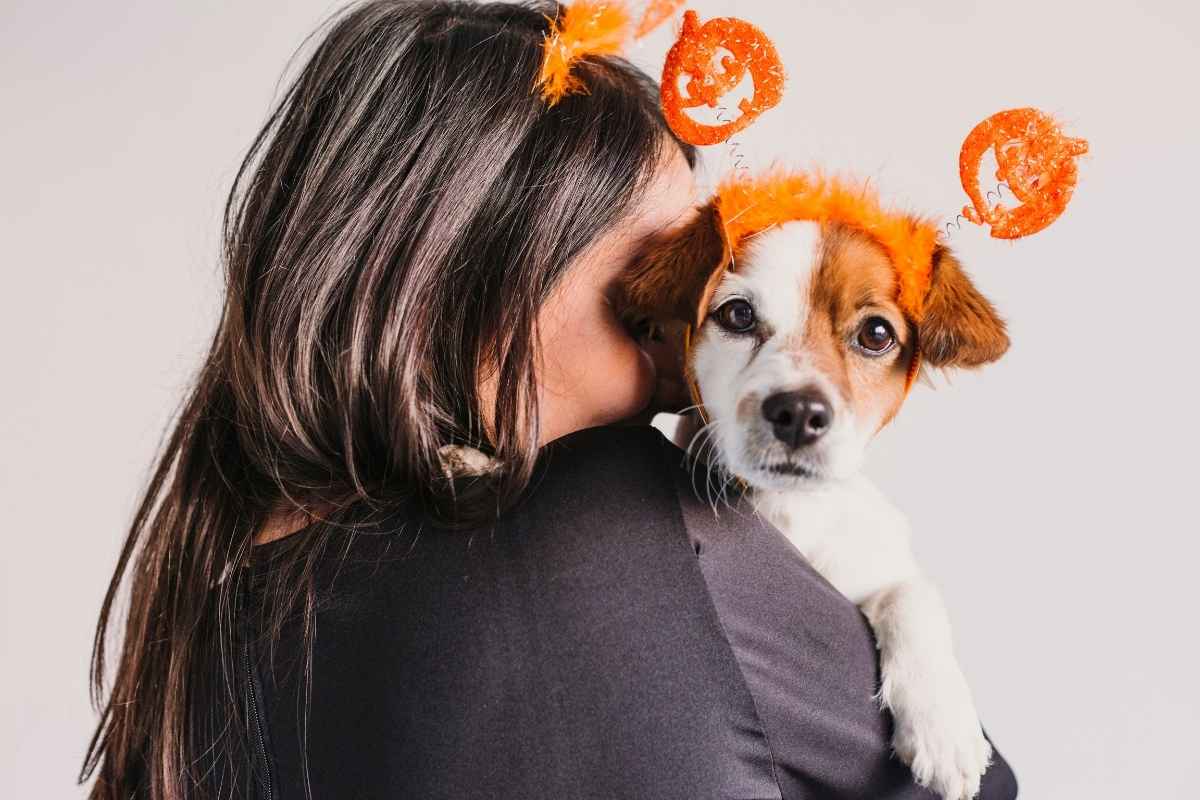


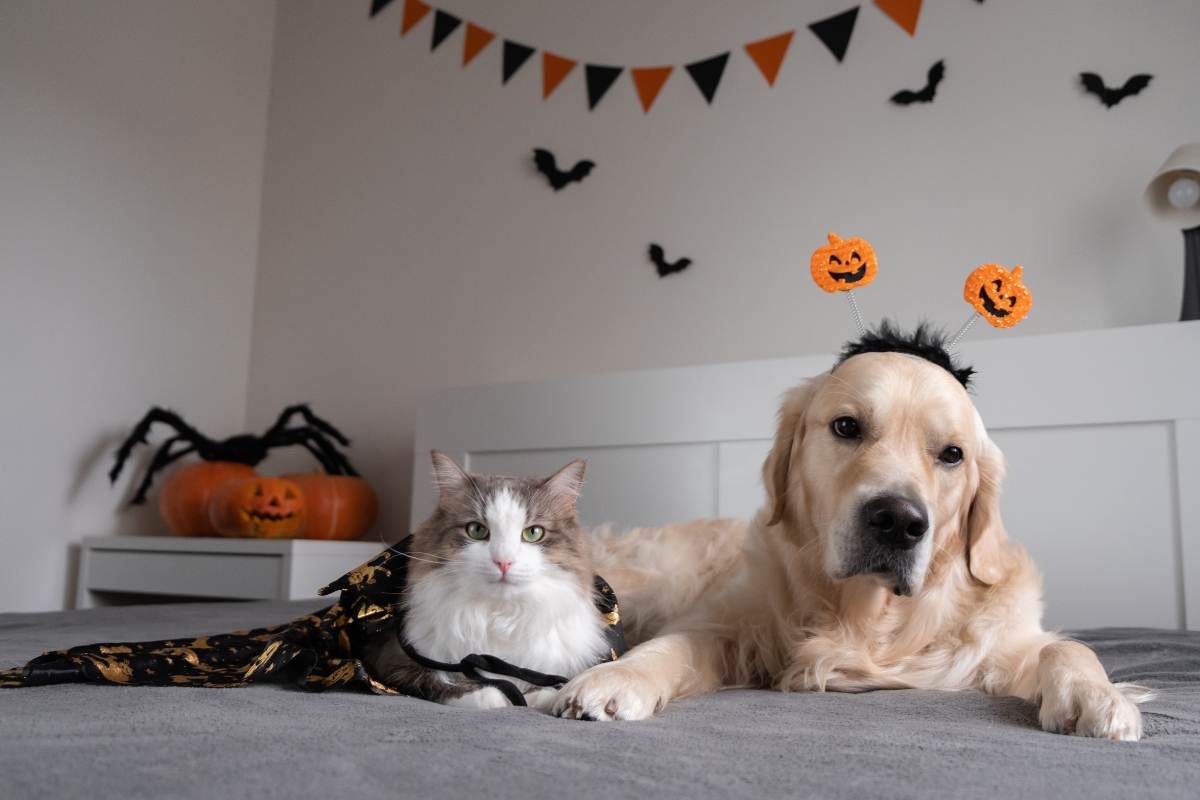
Halloween can be a fun night for families, but dogs and cats may experience it very differently. Doorbells ring repeatedly, unfamiliar people appear in costumes, candy is everywhere, and decorations suddenly fill the house. Even a normally relaxed pet can become frightened or curious enough to get into trouble.
Some Halloween hazards are easy to recognize. Others are surprisingly ordinary, such as leaving a candy bag on the floor or opening the front door while your cat is nearby. Knowing where problems can happen makes it easier to enjoy the holiday without an unexpected veterinary visit.
Here are seven common Halloween mistakes pet parents should avoid.
1. Leaving Halloween Candy Where Pets Can Reach It
A candy bowl on the coffee table may seem harmless until a curious dog decides to investigate it. Candy bags left in children’s bedrooms, backpacks, or on the floor can also become an easy target.
Chocolate is one of the better-known concerns. Dark and baking chocolate can be particularly dangerous because they contain higher concentrations of methylxanthines. Depending on the type and amount eaten, chocolate exposure may cause vomiting, diarrhea, restlessness, increased thirst, abnormal heart rhythms, tremors, or seizures.
Sugar-free products present another serious concern. Some contain xylitol, a sweetener that can be life-threatening to dogs. Xylitol can cause a rapid drop in blood sugar and may also damage the liver.
Grapes and raisins should also stay away from dogs because ingestion can cause severe kidney problems.
The safest approach is simple: store Halloween treats inside a closed cabinet or another location pets cannot access. Do not assume a high countertop will stop a determined dog or an agile cat.
If your pet eats something questionable, do not wait for symptoms before seeking advice. Contact a veterinarian and provide the product name, ingredients, approximate amount eaten, your pet’s weight, and when the exposure occurred.
2. Forgetting About Candy Wrappers and Small Halloween Items
Sometimes the candy is not the only problem. Foil, cellophane wrappers, lollipop sticks, plastic toys, costume accessories, fake spider rings, and other small Halloween items can attract curious pets. Cats may bat wrappers around before chewing them. Dogs may swallow a wrapper because it still smells like food.
Swallowed objects can become lodged in the digestive tract. An intestinal obstruction may cause vomiting, reduced appetite, abdominal discomfort, lethargy, or difficulty passing stool. Some foreign objects require veterinary removal or surgery.
Clean up wrappers as soon as candy is opened. Check floors, couches, children’s rooms, and other places where discarded items may end up. If you know or suspect your pet swallowed a non-food object, contact a veterinary professional rather than waiting to see whether it passes.
3. Letting Pets Stay at the Front Door During Trick-or-Treating
Halloween creates an unusual amount of activity at the entrance to your home. The door may open dozens of times in one evening. Costumed children may shout, run, or approach unexpectedly. Doorbells and knocking can occur repeatedly.
That combination can be stressful for pets and also creates opportunities for escape. A frightened cat may dart through an open doorway. An excited dog may run outside to greet visitors or become overwhelmed by unfamiliar costumes. Even pets that are usually calm around guests can behave differently when the environment changes.
Before trick-or-treaters arrive, consider setting up a quiet room with your pet’s bed, water, toys, and other familiar belongings. Keeping pets separated from the front door can reduce stress and lower the chance of an accidental escape. Make sure your pet’s identification information is current as an additional precaution.
4. Assuming Every Pet Will Enjoy Wearing a Costume
A tiny witch hat or superhero costume may look cute in a photo, but not every dog or cat enjoys being dressed up.
Costumes should never interfere with normal breathing, vision, hearing, walking, or movement. Loose pieces can become choking hazards, while tight straps or poorly fitted clothing can cause discomfort. Pets may also chew and swallow buttons, decorations, or other costume pieces.
Watch your pet’s behavior closely. Signs that a costume may be causing stress include:
- Trying repeatedly to remove the clothing
- Freezing or refusing to walk
- Hiding
- Excessive panting
- Vocalizing
- Flattening the ears
- Attempting to escape
- Chewing at straps or accessories
Never leave a costumed pet unattended.
If your dog or cat dislikes costumes, there is no need to force the issue. A comfortable seasonal collar or other simple option may be enough, provided it fits properly and does not bother your pet.
5. Putting Candles, Electrical Cords, and Decorations Within Reach
Halloween decorations can turn an ordinary room into something festive, but curious pets may see them as toys. Open flames are an obvious concern. A cat brushing against a candle or a dog knocking over a jack-o’-lantern can suffer burns or potentially start a fire.
Electrical decorations need attention as well. Pets that chew cords can injure their mouths or receive an electrical shock. Dangling strings, fake cobwebs, small plastic decorations, and battery-powered accessories can also become chewing or swallowing hazards.
Glow sticks deserve special attention around cats. Pets sometimes bite into them because they are easy to chase and chew. Although many glow-stick products are labeled non-toxic, their bitter contents can cause intense drooling and agitation. Inspect decorations from your pet’s point of view. Anything at nose, paw, or tail level deserves a second look.
6. Taking an Anxious Pet Into a Busy Halloween Environment
A dog that enjoys an ordinary neighborhood walk may not enjoy that same route on Halloween night. Masks, inflatable decorations, flashing lights, shouting children, unusual clothing, and crowded sidewalks can make familiar surroundings seem completely different. Some pets may become frightened and attempt to pull away or escape.
Cats should generally remain safely indoors rather than being exposed to Halloween street activity. For dogs, consider taking the regular evening walk before trick-or-treating becomes busy. If your dog does go outside later, use a secure leash and collar or properly fitted harness. Reflective equipment can also make your pet easier to see after dark.
Do not leave a dog unattended outside simply because the yard is fenced. Increased neighborhood activity may cause stress or unusual behavior.
If your pet has a history of significant fear or anxiety around visitors, noise, or unfamiliar situations, talk with a veterinarian before Halloween. Your veterinarian can discuss appropriate ways to manage the evening based on your pet’s health and behavior.
7. Waiting Too Long When Something Seems Wrong
One of the most important Halloween mistakes to avoid is taking a wait-and-see approach after a potentially dangerous exposure. If you discover an empty chocolate package, for example, your dog may initially appear completely normal. That does not mean the amount consumed was safe. The same principle applies when a pet swallows a foreign object, gets into a toxic substance, suffers a burn, or suddenly develops concerning symptoms.
Seek veterinary advice promptly if your pet develops signs such as repeated vomiting, severe diarrhea, tremors, seizures, difficulty breathing, heavy bleeding, sudden collapse, confusion, or loss of consciousness. The practice’s emergency guidance identifies toxic ingestion, breathing difficulty, seizures, significant bleeding, disorientation, and collapse among situations requiring immediate attention. Early communication also gives the veterinary team more information to determine what should happen next.
What Should You Do If Your Pet Eats Halloween Candy?
First, remove access to the remaining candy. Keep the package or ingredient label if possible. Try to determine what your pet ate, how much may be missing, and approximately when it happened. Do not induce vomiting or give home remedies unless a veterinary professional specifically instructs you to do so.
Call your veterinarian promptly. The appropriate response depends on several factors, including the substance involved, amount consumed, your pet’s weight, current symptoms, and how much time has passed. If your pet has already developed severe symptoms, treat the situation as urgent.
How Can You Prepare Your Pet Before Halloween Night?
A little planning can prevent many Halloween problems. Move candy, decorations, glow sticks, and small costume pieces somewhere secure before festivities begin. Walk dogs earlier in the day when possible. Prepare a quiet area away from the front door for pets that become nervous around visitors.
Check that collars fit properly and identification information is current. If your pet has known anxiety or health concerns that may make Halloween more difficult, discuss them with your veterinarian before October 31 rather than waiting until the evening itself. These precautions take little time but can make Halloween much calmer for everyone in the household.
Keep Halloween Fun Without Putting Your Pet at Risk
Halloween should leave your family with fun memories, not an unexpected pet health scare. Keeping candy locked away, securing the front door, choosing decorations carefully, and paying attention to your pet’s behavior can prevent many holiday problems.
When something does go wrong, timely veterinary care matters. Park Grove Pet Hospital has served Cottage Grove and surrounding communities since 1972 and provides care ranging from preventive services to diagnostics, surgery, and urgent pet care. If you need a veterinarian in Cottage Grove to evaluate your dog or cat, the veterinary team can help determine what your pet needs and discuss the next steps with you.
If your dog or cat eats something potentially harmful, becomes injured, or develops concerning symptoms, do not delay seeking professional guidance. Book an appointment today!
Frequently Asked Questions
Q1. What should I do if my dog eats chocolate on Halloween?
Ans. Contact a veterinarian promptly. The level of concern depends on the type of chocolate, amount consumed, your dog’s weight, and other factors. Keep the candy packaging so you can provide accurate product information. Do not wait for symptoms to appear before asking for veterinary guidance.
Q2. Is Halloween candy dangerous for cats too?
Ans. Yes. Cats should not be allowed to eat Halloween candy. Chocolate and other ingredients may cause illness, while wrappers and small packaging can create choking or intestinal obstruction risks. Store candy and discarded wrappers somewhere your cat cannot reach.
Q3. Where can I take my pet for urgent veterinary care in Cottage Grove?
Ans. If your pet needs prompt attention, Park Grove Pet Hospital provides urgent pet care and veterinary services in Cottage Grove. The hospital’s services also include diagnostic care, pain management, preventive care, and surgery, allowing the veterinary team to evaluate a range of health concerns.
Q4. Should I call a veterinarian if my pet seems normal after eating candy?
Ans. Yes, particularly if the candy contains chocolate, xylitol, raisins, or another potentially harmful ingredient. Some effects may not be immediately apparent. Contacting a veterinarian quickly allows the risk to be assessed based on what your pet ate and how much was consumed.
Q5. Can Park Grove Pet Hospital help if my dog or cat becomes sick around Halloween?
Ans. Yes. Park Grove Pet Hospital offers veterinary services that include diagnostic care and urgent pet care. Its diagnostic capabilities include an in-house laboratory and digital X-rays, which may be used when clinically appropriate to investigate illness or injury.
Q6. Who should Cottage Grove pet parents contact if they are concerned about a Halloween-related pet emergency?
Ans. Cottage Grove pet parents can call Park Grove Pet Hospital at 651-459-9663 for guidance during the hospital’s available hours. The practice also directs pet parents with after-hours emergencies to designated emergency veterinary facilities.